Before designing any visual content, you should first answer some questions. One of the most important one – what do you want to achieve with the visual?
Within the possible answers – one usually sticks out. I want my visual to grab the attention of the audience.
And to be honest – who doesn`t want that? The overall goal of putting the hard work into our marketing efforts is to make sure the audience actually sees our products. And hopefully gets into our sales funnel as a result of that.
The overly known classic methods – adding some bikini dressed bottoms, cute kittens and babies as the image – might not be suitable for every business (so you are in luck if you sell swimsuits, baby products or catfood 🙂 ). But the good news is – there is a bunch of other ways you can ensure, that your visuals attract the eyes of your target group.
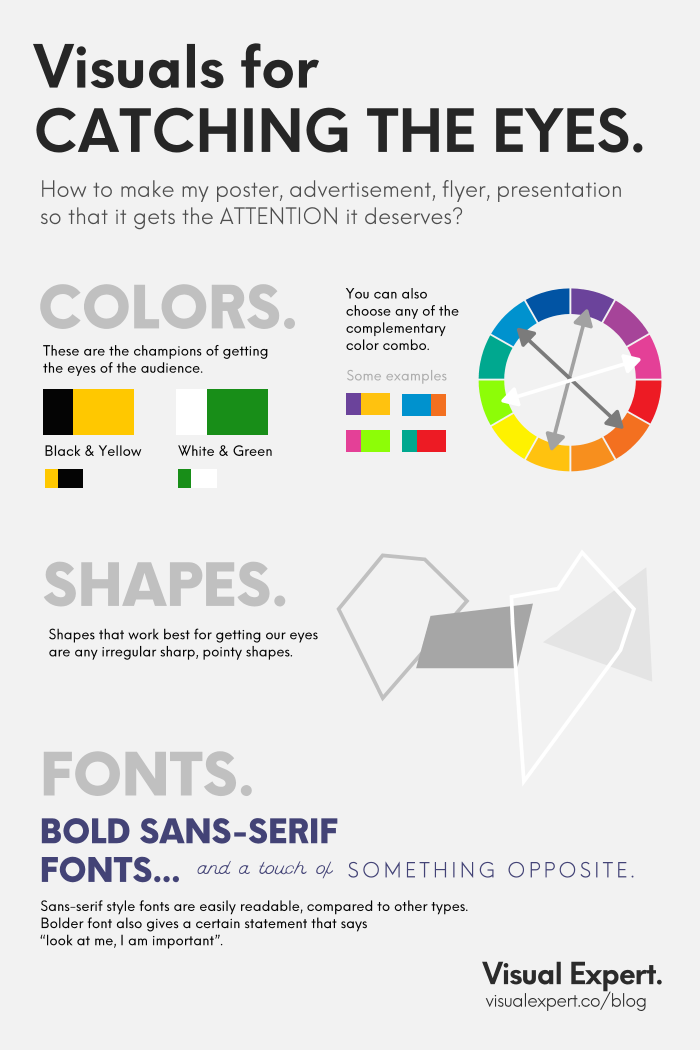
You can do that by using the right colors, shapes and / or fonts.
Colors that draw attention.
Unfortunately there is no single truly effective color for getting the attention. Yes – yellow works fine, but it is not enough.
The key to success lies in the color combinations.
There are quite a few to choose from, and you can even find something that fits your needs and values.
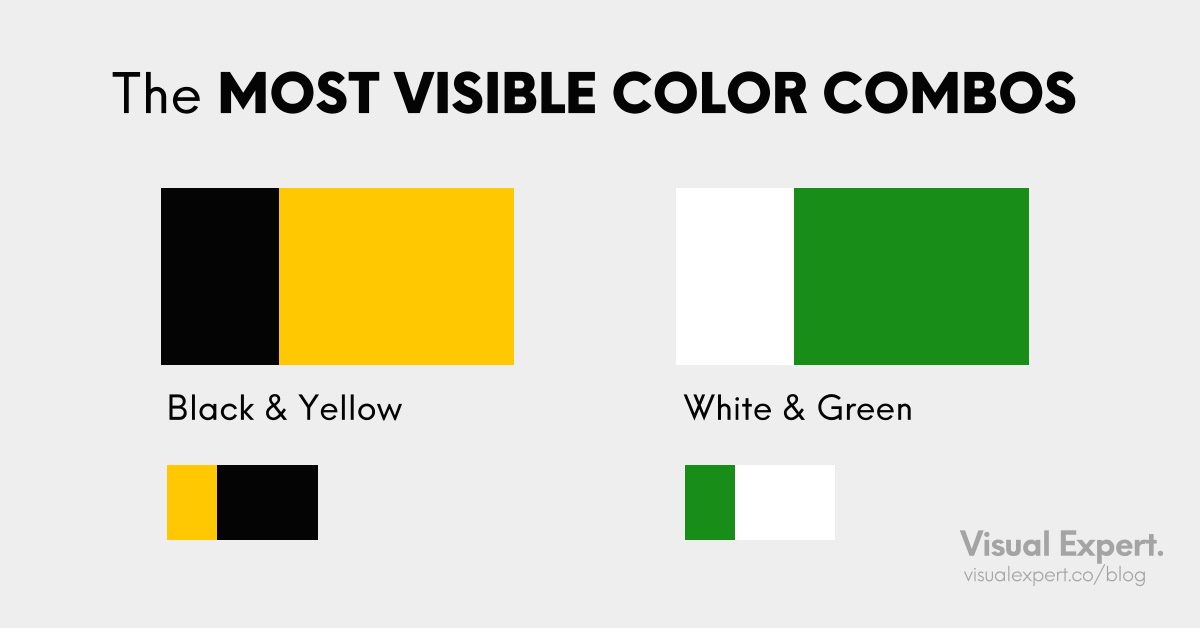
Yellow + Black and Green + White.
When it comes to desperately asking for the attention, nothing beats these two candidates.
Do they seem familiar?
There is a reason, why yellow and black are used as the top choice for price tags during sales. But beware – yellow and black paired together not only get the eyes, but also tells our minds that the product you see should be cheap. So essentially the best colors to draw attention are black and yellow. Especially if your brand or product should also give the sence of cheapness and affordability – this is the color combo to go for.
Green and white is less visible that black and yellow, but it is still powerful enough. And it does not come with the sense of cheapness. Have a look around – you might notice that upmarket or high-end brands use these exact colors together to communicate their special offers.
Any complementary color combo.
If any of previous colors does not fit you well, try any of the complementary colors. They are the ones, that sit opposite each other on the color wheel.

The fact is, that we are naturally bound to look at the opposites. You know – opposites attract. And the same works here. So if the main color for your brand is navy blue, the complementary color will be something a bit mustard yellow (or orange).
By the way – here is a good tool to get the complementary colors.
Shape up for attention.
The kind of shapes, that work best for getting our eyes, would be any irregular sharp, pointy shapes.

Pointy shapes have tension points in their corners that draws our eyes to them. So use any irregular shape for maximum impact, but make sure your final design does not end up messy. Do not use too much of corners or shapes.
Circles are not the kind of shapes to go for unless they are a crucial part of your brand book. Circles are pretty natural shapes, that calm us down and do not catch our eyes.
Bolder sans-serif fonts.
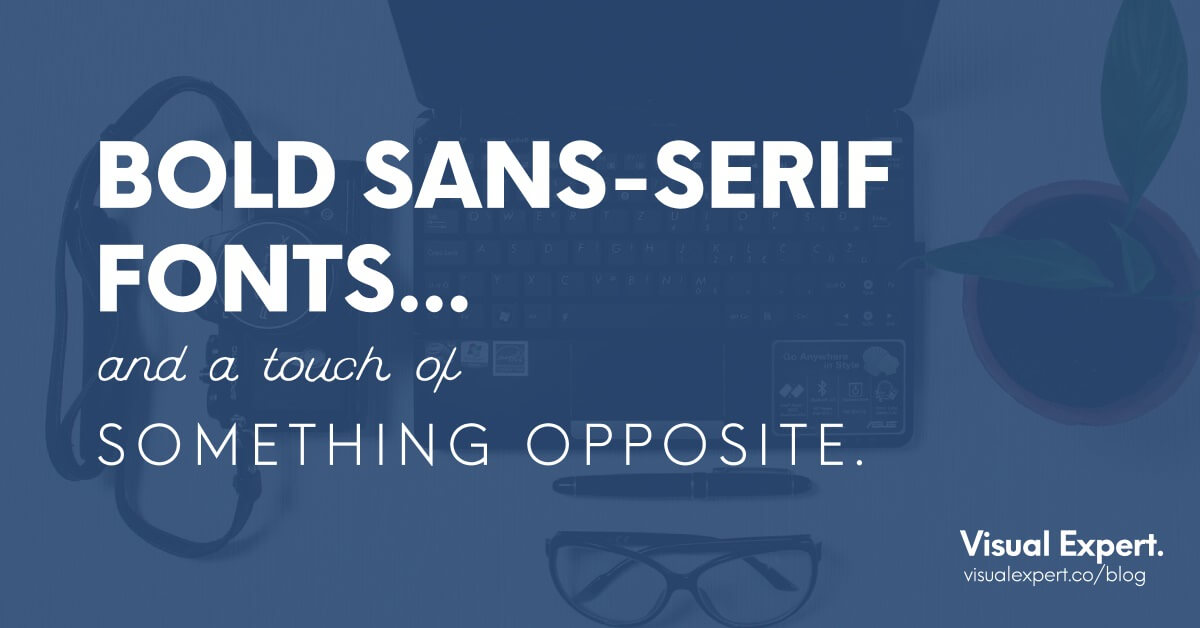
First of all – sans-serif style fonts are easily readable, compared to other types. Secondly – bolder font gives a certain statement that says something like “look at me, I am important“.
Be careful if your brand or product has to communicate feminine feel and values. Bolder and heavier fonts are more associated with masculanity, and we tend to think more of the male-ish values when seeing them.
Also – put a bit of mix here. Once again – opposites attract. Take one bold sans-serif font as the main font. And then add a serif font as an accent or secondary font. Heavy font can also be paired with a lighter one.
Examples.
Here is a good example of a poster, that easily gets our attention and uses all the elements mentioned in this article.
Wrap up.
The thing is that you do not need intrusive imagery to grab attention. With a clever usage of other visual communication assets, you can achieve the same effect without spoiling your brand and still sticking to your business values.